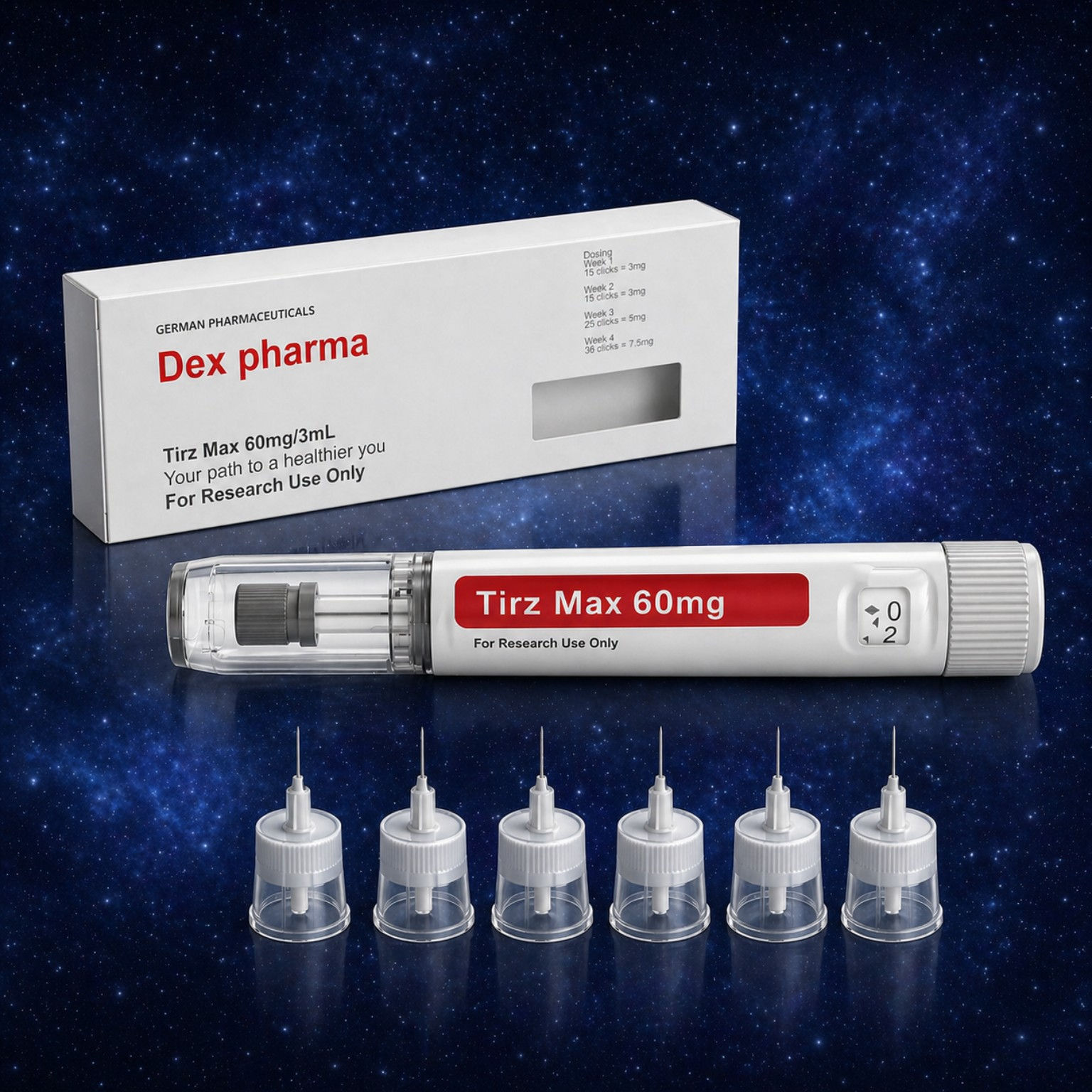

Dex Pharma Tirz Max Pen - 60mg/3mL
Tirz Max 60mg/3mL is a premium, high-strength tirzepatide research pen, sourced from Germany and produced to a high-purity standard for advanced research applications.
With a total content of 60mg in 3mL, Tirz Max offers a much higher milligram amount than many lower-strength tirzepatide pens commonly being sold. This makes it a practical option for customers looking for a larger-capacity research pen with more flexibility and longer use potential.
Tirzepatide is a dual-action compound currently being studied for its activity on the GIP and GLP-1 pathways, which are linked to appetite, metabolic response, glucose regulation, and body-composition research.
Key Features
High-strength 60mg formulationHigher total milligram content than many standard tirzepatide pens on the market.
Sourced from GermanySupplied from a German laboratory source with a focus on quality and consistency.
High-purity TirzepatideProduced to a high-purity standard for reliable research use.
Convenient 3mL pen formatEasy-to-handle pre-filled style pen with included needle tips.
Tirzepatide FAQs
1. What is tirzepatide?
Tirzepatide is a peptide-based compound that acts on both GIP and GLP-1 receptor pathways. These pathways are involved in appetite signalling, glucose regulation, insulin response, and metabolic research. Prescription tirzepatide products are marketed internationally under brands such as Mounjaro and Zepbound.
2. Is this the same active compound found in Mounjaro?
The active compound is tirzepatide, the same molecule used in approved prescription products such as Mounjaro and Zepbound. However, this product is supplied as a research-use product and is not sold as an approved medicine, treatment, or substitute for a doctor-prescribed product.
3. What makes Tirz Max 60mg different from many other pens?
Tirz Max contains 60mg in 3mL, which is a higher total milligram amount than many lower-strength tirzepatide pens commonly sold online. This gives a larger total amount of tirzepatide in one pen, but users should not assume that “higher mg” means they should use more at once.
4. What is tirzepatide being researched for?
Tirzepatide is being researched and used in regulated medical settings for type 2 diabetes, weight-management, appetite control, glucose handling, and metabolic health. In approved medical use, it is prescribed under professional supervision.
5. Is tirzepatide approved as a treatment?
Yes, tirzepatide is approved in some countries as a prescription medicine under regulated brand names. However, approval depends on the country, indication, and product registration. This specific pen should be presented as research use only unless it is formally registered as a medicine in your market.
6. How often is tirzepatide usually taken in approved medical use?
In approved prescription use, tirzepatide is generally administered once weekly by subcutaneous injection. This is a general reference from approved product information, not a custom dosing instruction for a research pen.
7. What is the usual beginner starting point in official medical references?
Official prescribing information commonly starts tirzepatide at a low introductory dose and then increases gradually. This slow escalation is used to improve tolerability, especially stomach-related side effects. Any actual dosing decision should be made with a qualified healthcare professional.
8. Why do people usually start low?
Tirzepatide can cause nausea, reflux, appetite suppression, constipation, diarrhoea, stomach discomfort, fatigue, and dehydration, especially if increased too quickly. Starting low and increasing slowly is the standard approach in approved medical protocols to reduce side effects.
9. Where is tirzepatide normally injected?
Prescription tirzepatide is normally injected subcutaneously, meaning into the fatty layer under the skin. Common injection areas include the abdomen, thigh, or upper arm, with rotation of injection sites recommended.
10. What are common side effects?
Commonly reported side effects include nausea, vomiting, diarrhoea, constipation, burping, reflux, stomach discomfort, reduced appetite, and fatigue. Many users report that side effects are strongest when starting or increasing dose.
11. What do users commonly say helps with side effects?
Across patient forums and social discussions, common practical tips include eating smaller meals, avoiding greasy or very heavy foods, drinking more water, keeping protein intake steady, adding fibre, and not skipping meals completely. These are anecdotal lifestyle tips and should not replace medical guidance.
12. What should a newcomer know before starting tirzepatide?
A newcomer should understand that tirzepatide can be powerful, appetite reduction can be strong, and side effects can happen. They should avoid rushing dose increases, stay hydrated, eat enough protein, and seek medical advice if they have diabetes, use insulin or sulfonylureas, have kidney issues, gallbladder problems, pancreatitis history, severe stomach problems, or are pregnant or breastfeeding.
13. What serious warnings are associated with tirzepatide?
Official prescribing information includes warnings around thyroid C-cell tumour risk observed in animal studies, pancreatitis, gallbladder disease, kidney injury related to dehydration, low blood sugar when combined with certain diabetes medicines, severe gastrointestinal reactions, allergic reactions, and possible worsening of diabetic retinopathy in some diabetic patients.
14. What happens if a weekly dose is missed?
In official patient guidance, if a dose is missed and it is within a certain time window, it may be taken when remembered; if too much time has passed, the missed dose is skipped and the normal schedule resumed. It is important not to double-dose to “catch up.”
15. Is this product suitable for everyone?
No. Tirzepatide is not suitable for everyone. It should be avoided or used only with proper medical guidance in people with certain medical histories or those taking specific medications. For your Shopify page, the safest wording is: “This product is supplied for research purposes only and is not intended to diagnose, treat, cure, or prevent any disease.” Regulatory authorities have warned some online sellers about marketing “research use only” GLP-1 products for human consumption, so avoid making direct treatment claims or personalised dosing promises.
RESEARCH & RECOMMENDATIONS
Healthy Eating & Lifestyle While Using Tirzepatide
Tirzepatide works best when paired with a proper lifestyle plan, not treated as a replacement for healthy habits. Because appetite may drop sharply, users should focus on quality over quantity: smaller meals, high-protein foods, vegetables, fruit, whole grains, healthy fats, and plenty of water. The best eating approach is usually a high-protein, lower-sugar, moderate-carbohydrate diet, with meals kept light and clean to reduce nausea or reflux. Very greasy, very sweet, or overly large meals can make stomach side effects worse, so many people do better with smaller portions spread through the day.
Exercise should be introduced gradually and consistently. A good starting point is daily walking, then adding light resistance training 2–4 times per week to help preserve muscle while weight is coming down. This is important because fast weight loss can include muscle loss if protein intake and strength training are too low. The ideal lifestyle goal is not just to lose weight, but to build a routine that can be maintained long term: better food choices, regular movement, enough sleep, hydration, and reduced alcohol/sugary snacks. Tirzepatide should be viewed as a support tool alongside lifestyle change, not a stand-alone solution.
